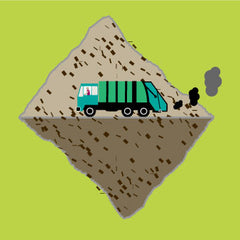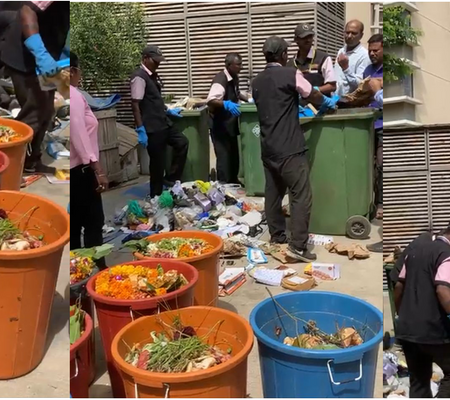

The first difference is the volumes of waste that are managed. Home composting only deals with about 30 – 50 kgs of waste per month. Large scale composting deals with thousands of tonnes of organic waste so problems of leechate management, pests, odour, pollution of soil and air, etc are much bigger.
No. Compost can be made in open piles or in a pit in the ground.
Traditionally composting at home was done in a pit in the corner of a garden.
Today a pit is not always a viable option. Also, most urban Indians are not aware that you can significantly improve urban waste problems by composting at home.
Daily Dump discovered that most people would like to help (reduce the waste in urban environments),but there was no solution that made composting at home convenient, fun, hygienic and odour-free. That’s why we designed these products that help you do this at home.
Composting involves a little looking-after that you can build into your routine. A couple of composting cycles and you will be quite a Composting Ustad!
The best way for an individual to help the waste issue in their city is to manage their waste at source. So whether you are on the 10th floor of a flat or in a small home you can compost at home now.
See link, if Composting at home is so simple, Why don't more people do it
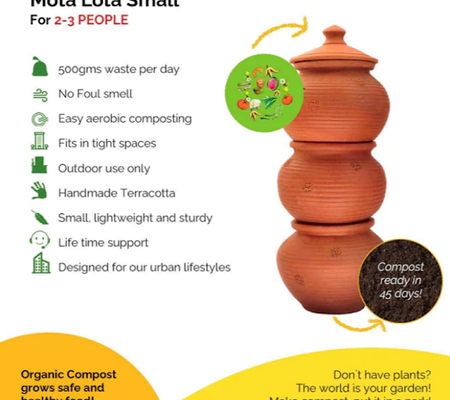
A product helps keep the piles neat, retain heat and moisture.
It is also convenient to use, a pit is very difficult to maintain.
The product makes it easy to use in places where space is at a premium.
It keeps rats, rain and pests away and is beautiful so can be proudly displayed in your garden or balcony.
The Daily Dump composters are all outdoor products.
No, you cannot do Vermi-composting in daily dump products. Vermicomposting needs some expert and consistent looking after. While it produces superior compost, its not something everyone can do. The worms need a well maintained pH and temperature environment and cannot handle too much of lime or cheese or meat.
Anywhere between 60 – 90 days!
You need to spend only 10 minutes daily to manage your organic waste. If you get your segregation containers sorted out – it’s just a task of dumping and stirring and adding leaves that you need to do. Training your help well makes it that much simpler. And if even that is not possible – just sign up for a daily dump service plan and we will handle maintenance completely – all you will have to do is dump!
About 50 -70% of Indian household waste generated is organic in nature and can be used to make compost.
Any organic matter can be converted to compost. (see the list of what can and what cannot)
If you cut them – then they compost faster (since more surface area is exposed to the air).
But the product works even if you do not cut large pieces of vegetable and fruit up. Suit yourself.
Yes. Garden leaves and grass clippings are organic materials waiting to be turned into compost. Garden waste and kitchen waste should be mixed together to prevent odour and flies.
You need to add dried leaves or shredded newspaper because kitchen waste discharges a lot of water when decomposition happens. This will make the pile over wet if it is not balanced out with dry organic material.
You can use shredded newspaper or paper instead. Make sure you do not let it clump up. Spread it evenly. In case you need leaves, come and pick up a lot from us at Daily Dump. We sweep up dried leaves and store them for use by our customers.
You can also add sawdust instead of dried leaves or newspaper. It should be wood sawdust not particle board or composite board dust.
Adding a lot of leaves of the eucalyptus tree or the silver oak tree will slow down the decomposition process. Most other leaves like the mango, jackfruit and ashoka are manageable by the Daily Dump product.
Neem leaves are excellent.
Having a balance of wet green materials and brown dried materials is essential to good compost. Different people have different ratios – but you do not have to worry too much about this. You are managing waste – not producing the best compost. If you are a compost “ustad” – then you might want to visit this page….. to read about compost recipes – ratios of browns to greens.
Yes, you can add cooked waste food to your dump – just make sure you cover it with dried leaves – so that flies do not have anything to get attracted to.
Yes.
If your family generates a lot of citrus waste, do add some baking soda to neutralize the acidity.
Highly acidic piles decompose slowly and may smell.
Not enough to make a lot of money – depending on how many kilos of waste you generate – you can produce up to 2 - 6 kgs per month.
Yes you can, but it requires you to spend more time!
(5 minutes more!) Are you prepared to stir the pile in the Daily Dump products everyday? Stirring everyday helps speed up the process.
(You are letting a lot more air in to help the microbes break down matter evenly and faster).
In addition to this you can add various accelerators. Daily Dump supplies one and you can also use cow urine,
cow dung, half done compost and horse manure.
Any additive that speeds up the process of decomposition can be called an accelerator.
Remember however that you can make compost without any of these – just by making sure you keep the dump moist and aerated. Mixing a fresh pile of waste with a pile of semi-composted material also speeds us decomposition. Compost eventually…………happens! (You can slow it, but cannot stop it!)
The figures given against each activity like stirring, spraying, adding accelerator are guidelines. You can experiment and arrive at a figure that suits your lifestyle and convenience.
Moisture is critical – it needs to be just right. Like an expert says – there must be the glisten of moisture but no sticky mess. Add water if there is less moisture and mix in dried leaves if there is excess moisture.
You need more water in the pile. Add water in and mix it in evenly.
Your pile has too much water and has compacted. You need to remove the contents bit by bit into a bucket and mix in dried leaves so that the whole pile is aired and now has dry matter to compensate for the excessive wetness. Then return the aired material into the product. Call the Daily Dump for a “crisis service visit” in case you want us to do this for you.
Kitchen waste has a high water content which is discharged when decomposition begins. This discharged liquid is called leechate. Leechate is nutrient rich and when diluted is a good additive to plants. The Daily Dump products are designed to take care of this.
The Daily Dump products are designed to absorb this liquid into the finished compost and prevent leaks.
When your pile has turned very dark and you can no longer see the forms of vegetables and fruit and leaves you know it is time to sieve it. Also it is slightly damp and smells like fresh earth. Usually it takes up to 3 months for the compost to fully mature and the pH balance to be right for use.
You need not sieve it if your mixture is crumbly and without very big pieces. Most gardeners prefer to use larger textured compost.
These you must put back in to your product. These will decompose fully after two cycles
If it has been produced at home with all your home waste – then it will be great for your plants. Not to worry.
Ideally add 3 parts of compost to 7 parts of soil. Some plants may need more – your malli will know.
If composting is done right – the compost pile will have an earthy smell – no purification odour. Only a pile that is too wet produces odor. Another source of odor is food scraps that aren't buried into the compost or covered with straw, sawdust or leaves.
Stir, stir, stir!
Sure it does. Insects are part of the composting process. Tiny bugs, flies and other members of nature's composting force will show up at your composter to eat from the material. Just don't put the composter under your kitchen window, and they won't bother you because they prefer the compost. Use lemon grass oil spray to control the flies and cover your pile with a lot of leaves – this will keep fruit flies away. When there is no easy-to-eat food for flies, they fly away!
Your waste generated at home is safe for decomposition at home in the volumes you produce. You should just take care not to let it become too moist or slimy; this produces odours and gives you an impression of “not-healthy”. Most of the creatures that you see that appear during the process are harmless; in fact they are very good for the environment. http://compost.css.cornell.edu/monitor/macroinvertebrates.html
We have done an extensive study on the kinds of flies that appear. The black soldier fly eco-cycle suppresses the housefly from thriving. The black soldier fly is safe, does not bite and is not a germ carrying insect. It is nature's scavenger and is good for compost heaps.
(http://ipm.ncsu.edu/AG369/notes/black_soldier_fly.html)
You can add neem powder, (Daily Dump stocks this) or turmeric powder to keep maggot population down.
To learn more about what real concerns you can have about the "health" of the process - read here
The daily dump team found that most customers who say that they hate creepy things are usually the ones who successfully compost. They get over their initial discomfort and begin to understand the “interconnectedness” of all life!
http://www.thewormmanindia.com/ (see this site and you will feel you can handle anything!)
Not if it is maintained in the right way. Don't deposit too much meat, fat or large amounts of protein food like cheese. If you have had a party where you have a lot of leftovers – make sure you dump it deep inside and cover it up with a lot of leaves. The product itself is designed to protect the composting matter from the pests like rats and bandicoots.
So no fear of rats getting in.
Yes, there are - the ones that compost. They're exactly the same ones as they are in your lawn, dried leaves, forest soil and humid turf. They are not harmful to humans, they simply compost dead material.
They're already there when you decide to put up a compost site.
Pathogens propagate in piles that have too much non-vegetarian matter. Even these are controlled if the pile reaches temperatures of 65-70 degrees centrigrade. So if you want to be completely safe – do not put non-vegetarian food in.
Use gloves and tools and tell yourself there is no difference between you and a heart surgeon.
Then you will bring the compost to life!
Your grandmother would have told you a Jataka tale and convinced you. We feel strongly that you should at least try and see the difference it makes to you once you see orange peels and rotting papaya turn to dark, sweet smelling compost.
You will look at yourself and the world differently – with a sense of wonder and awe!
Managing your waste at source is the direct way you can contribute to reducing the waste management problem of the city. And throwing out nutrient rich material is better than throwing out toxic material. Throwing compost out will nourish the earth. Like we feed crows and other creatures in India, you will be feeding “Bhoomi” (mother earth).
And if you produce a lot (more than 10 kgs at a time), Daily Dump will buy it back from you.