







SKU: CC0040
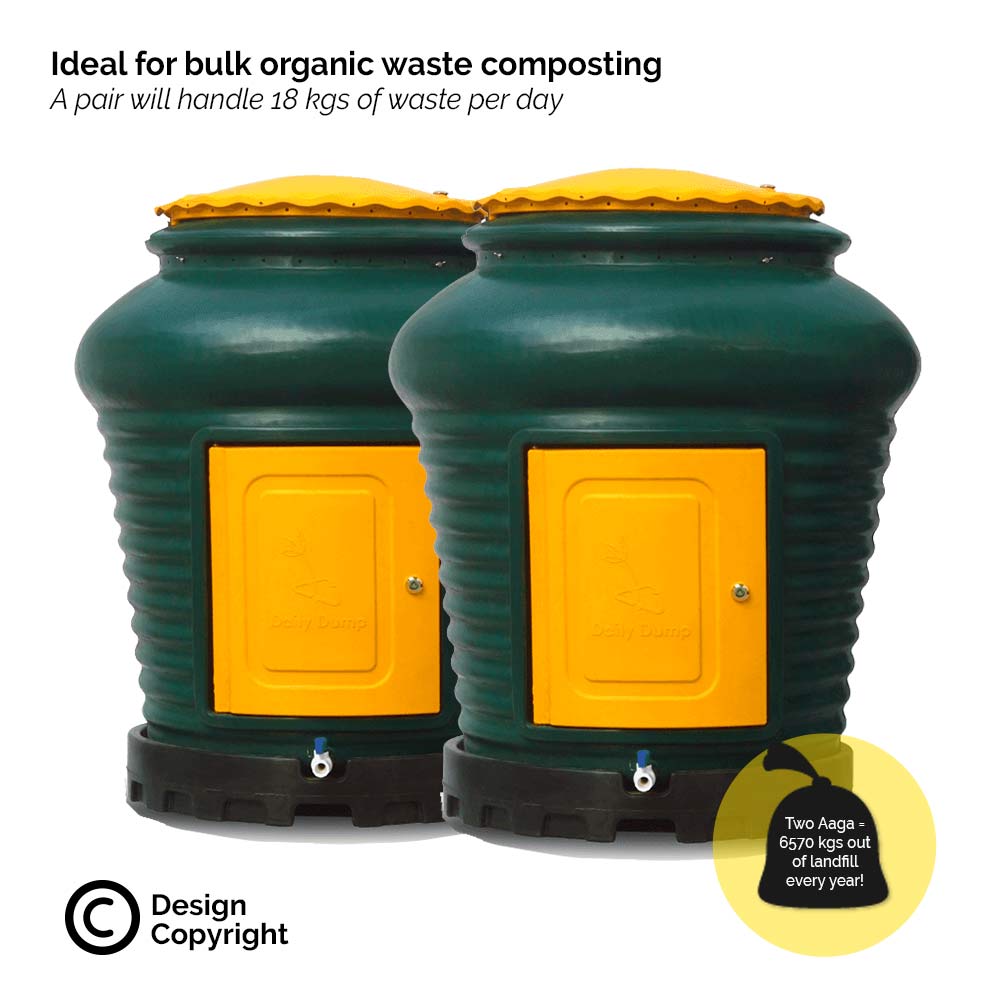
OWC Aaga 550 Compost Kit| Speedy smell-free Bulk Organic Waste Converter
 +91 99164 26661
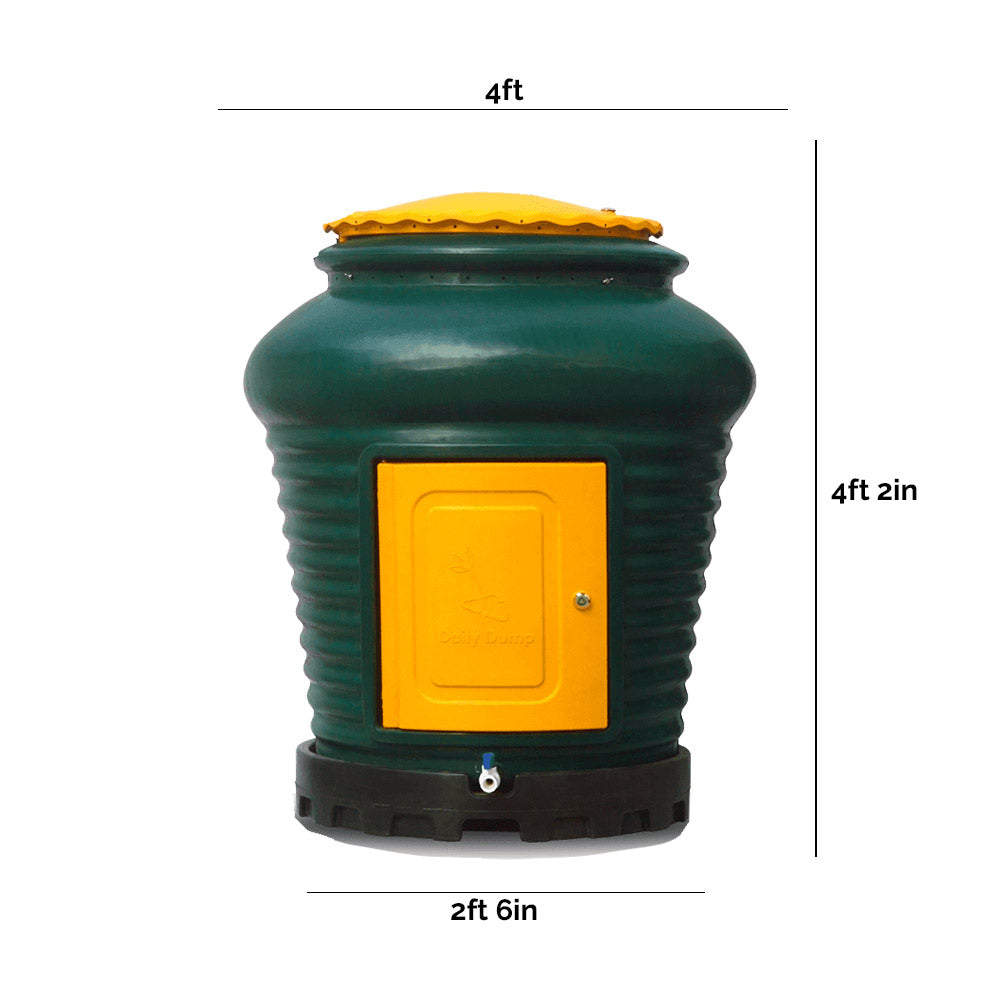
| Dimensions (inches) | 42"Dia x 38"H |
| Contents | 1 composter |
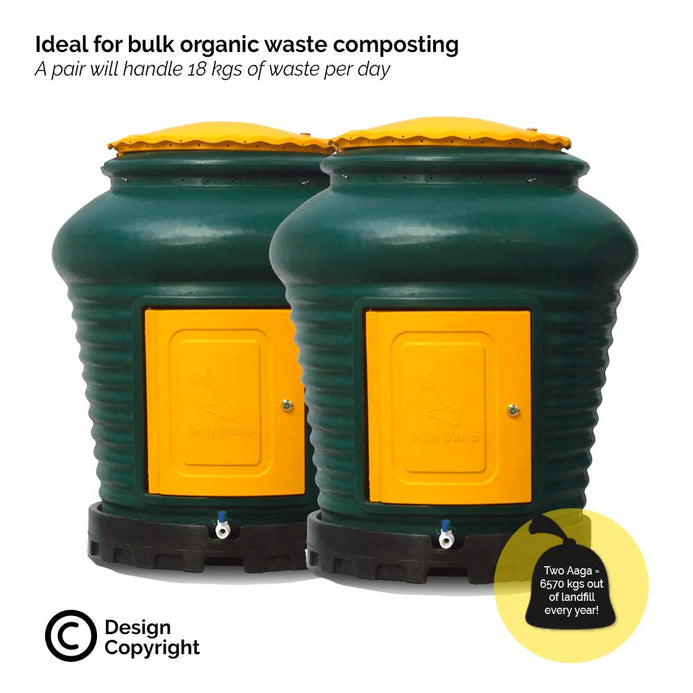
| Capacity | 18kg wet waste daily - per pair of Aagas |
| Material | UV stabilised, roto moulded plastic |
| Usage | outdoor space with good ventilation |
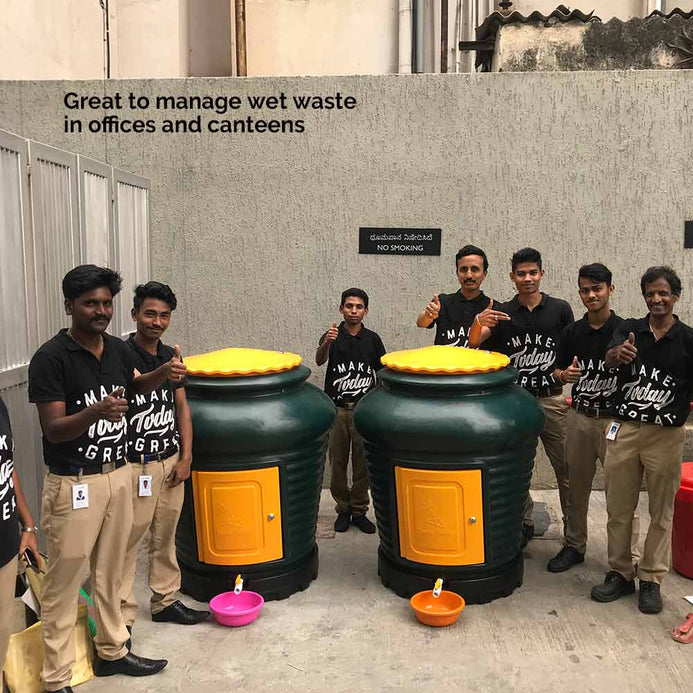
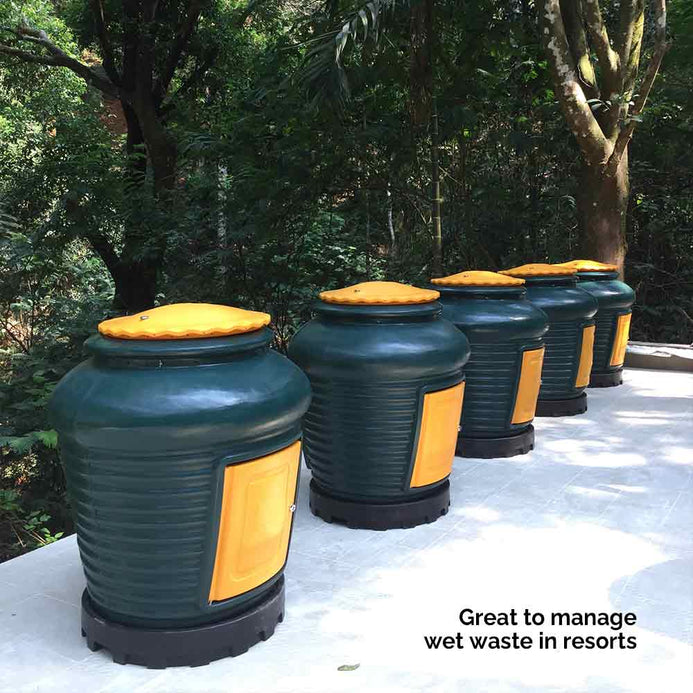
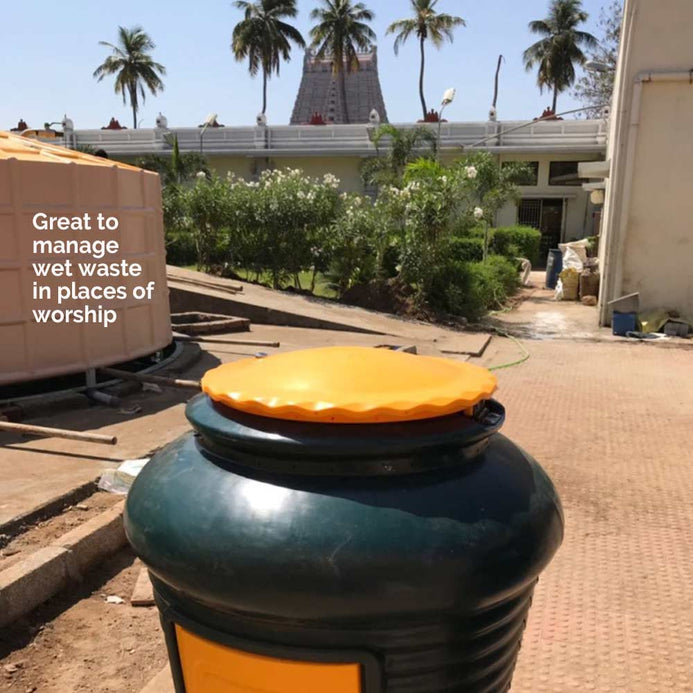
| Ideal for | apartments, offices, resorts & all community institutions |
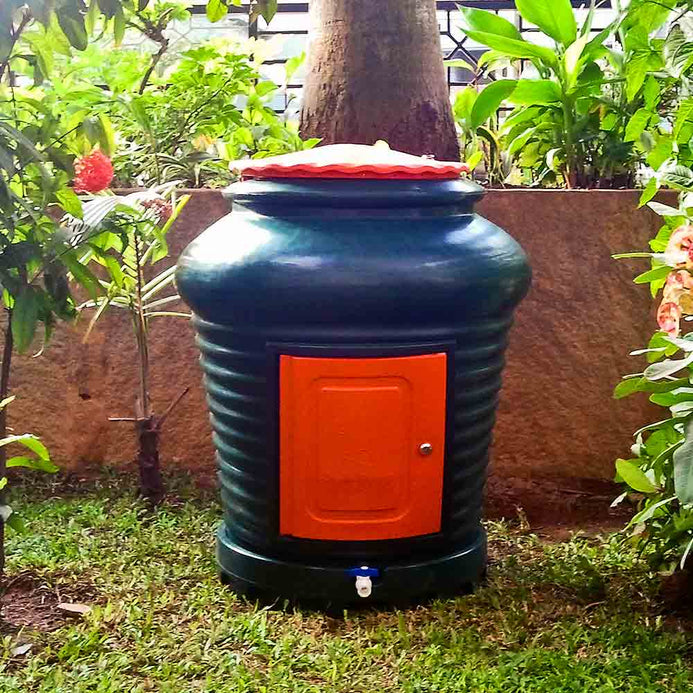
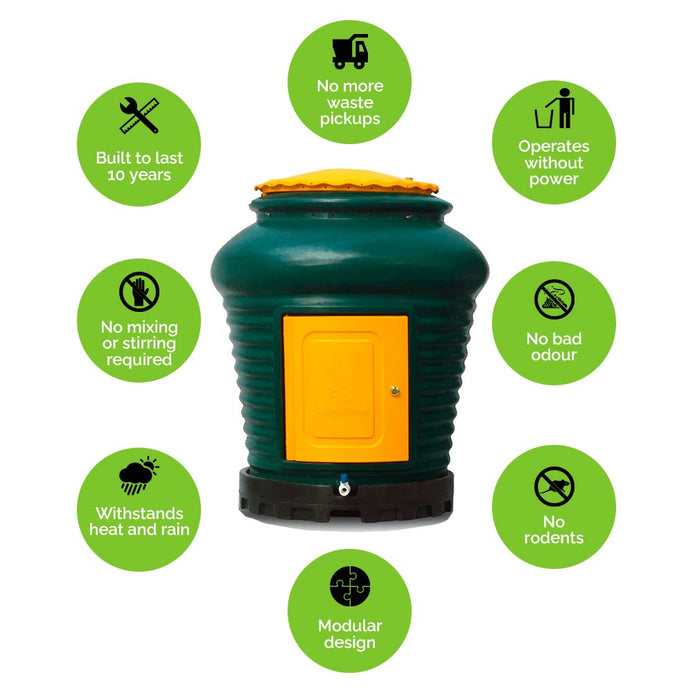
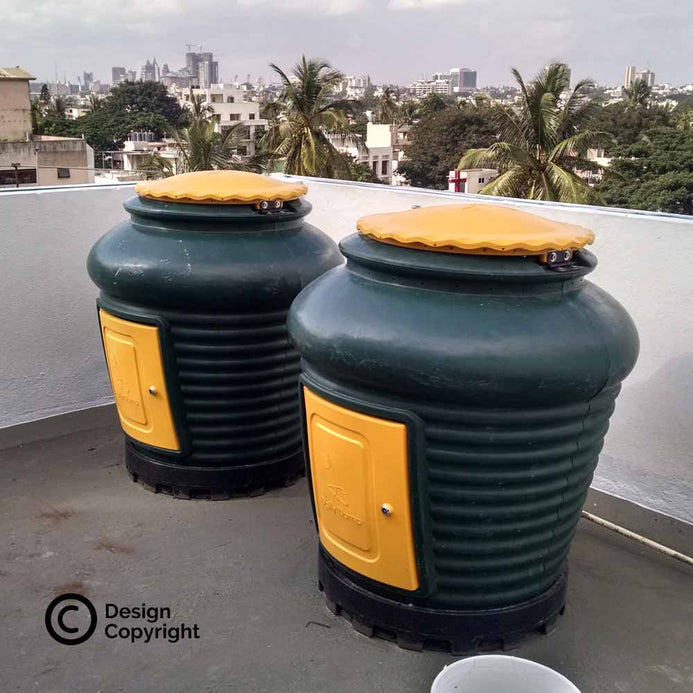
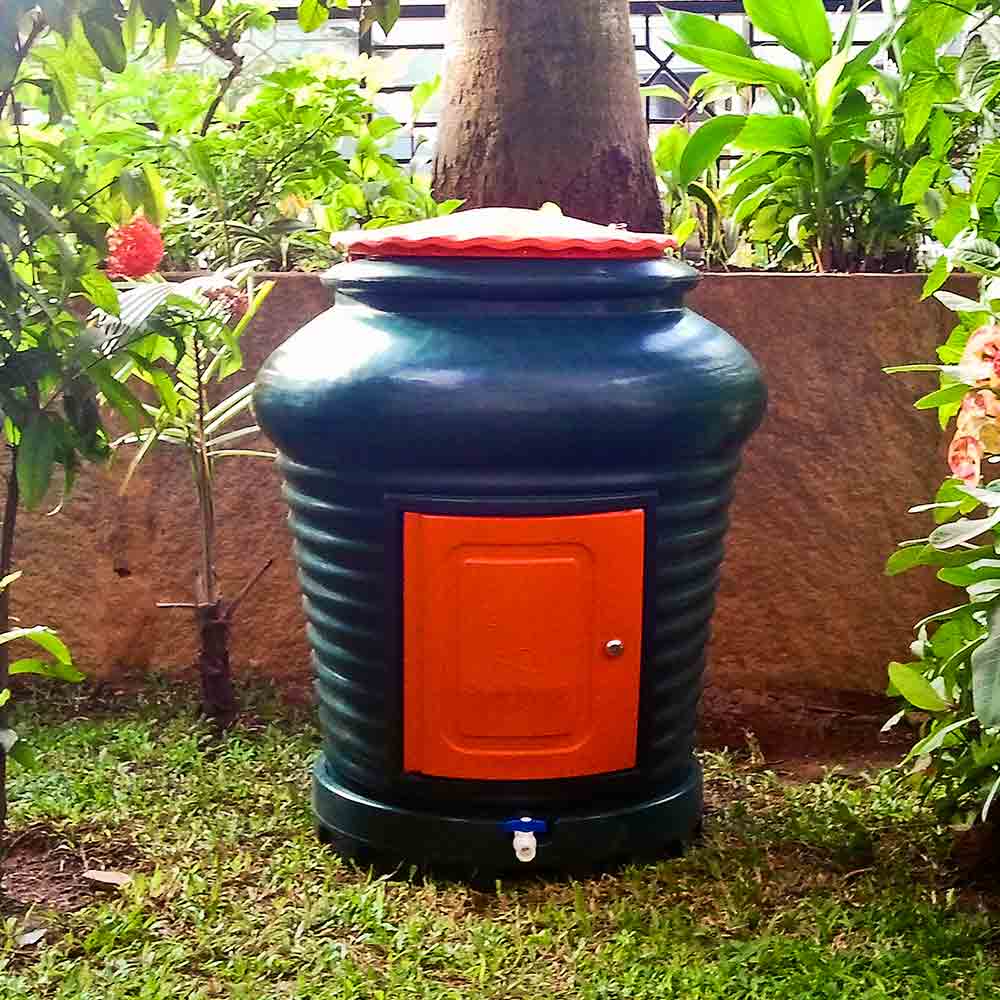
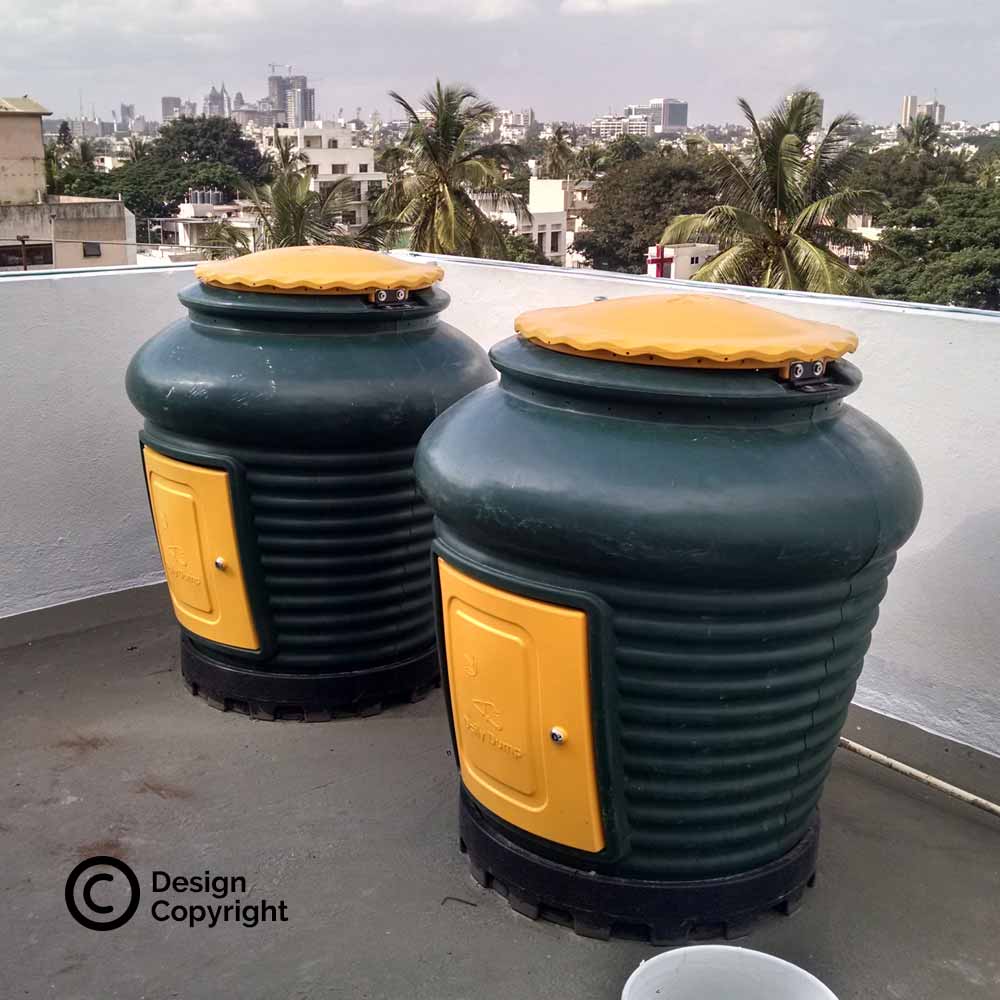
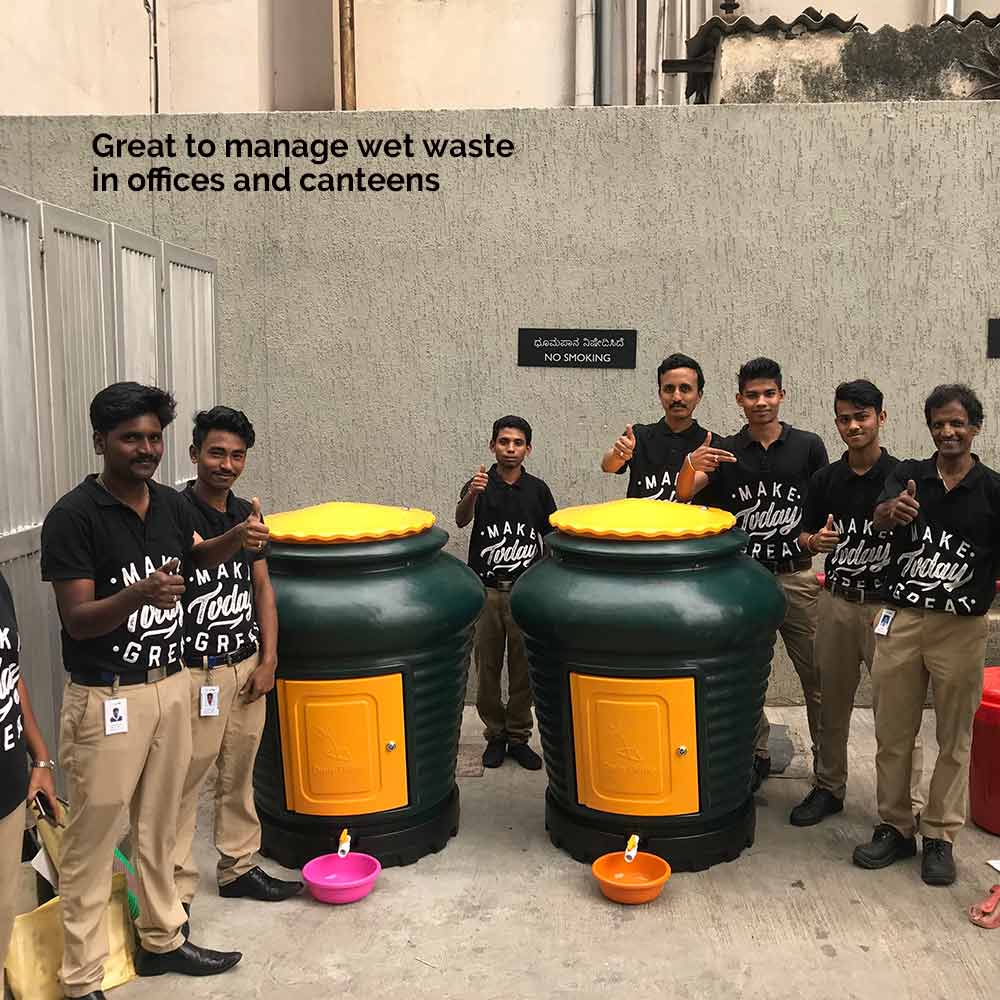
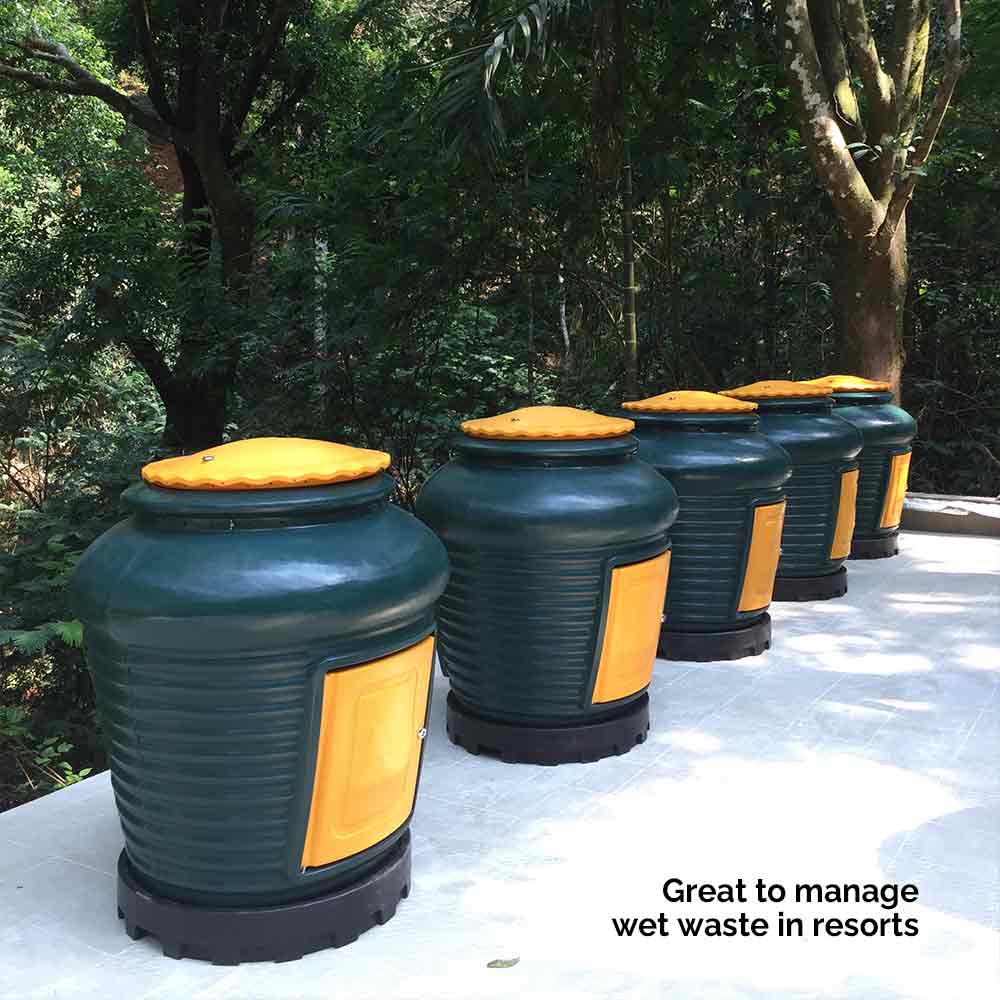
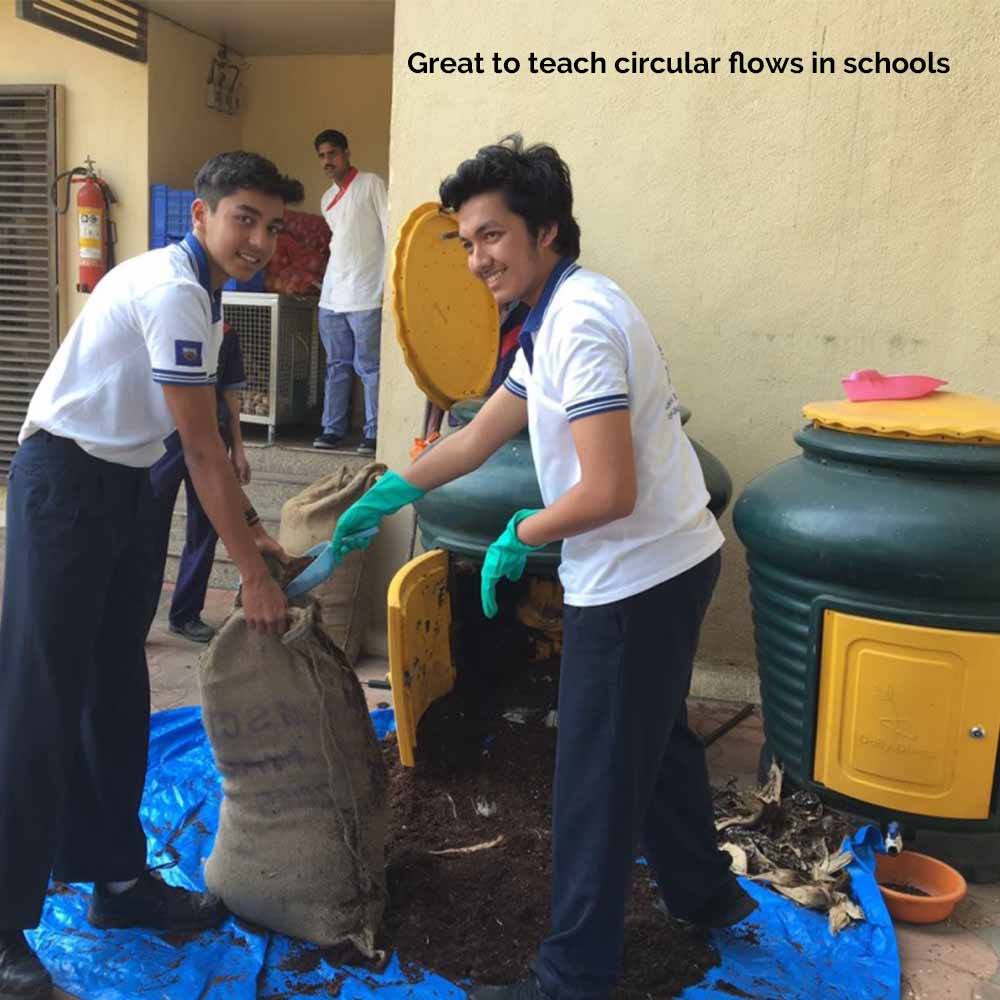
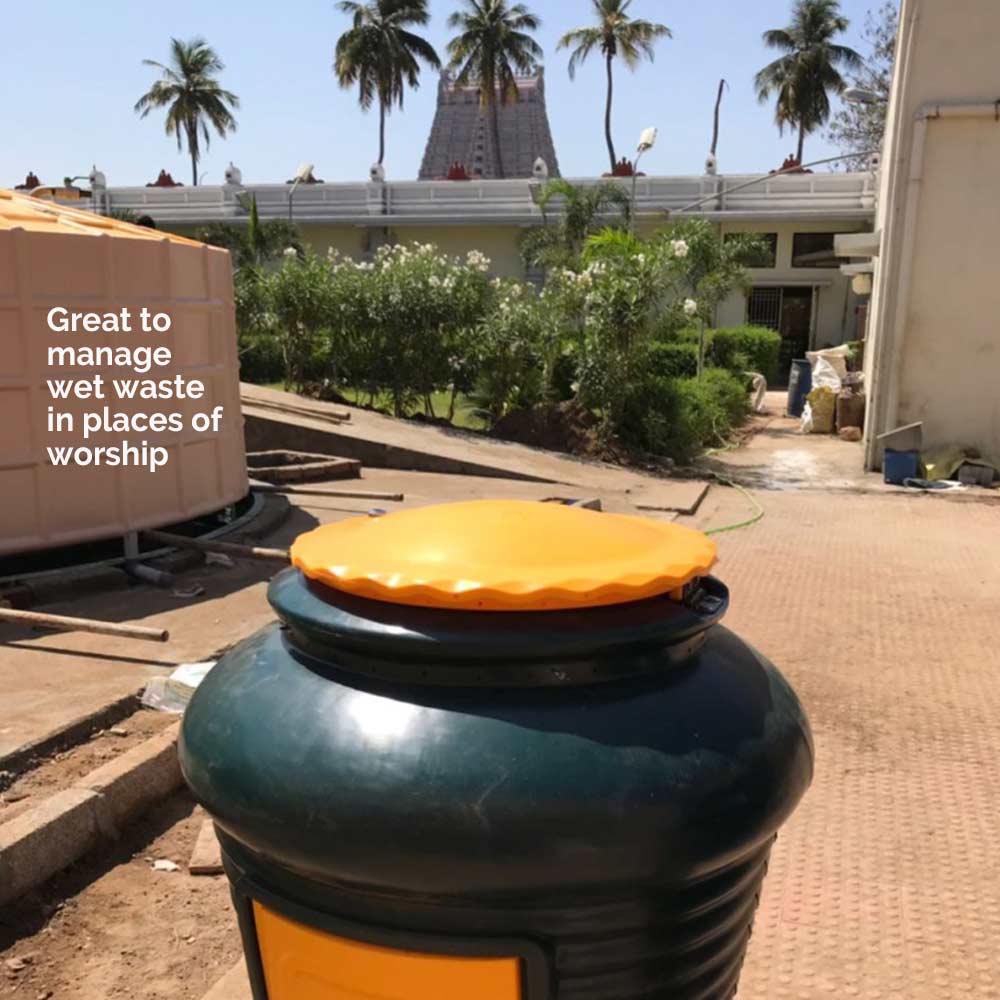
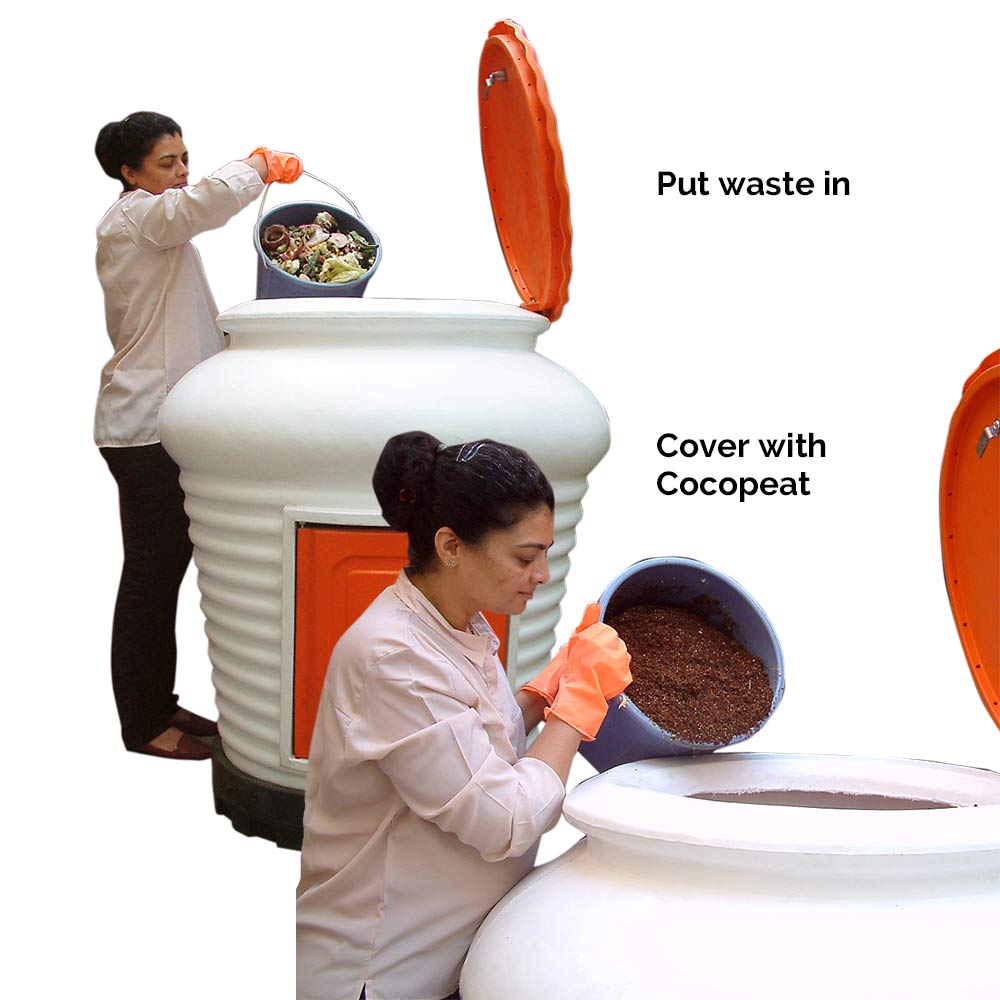
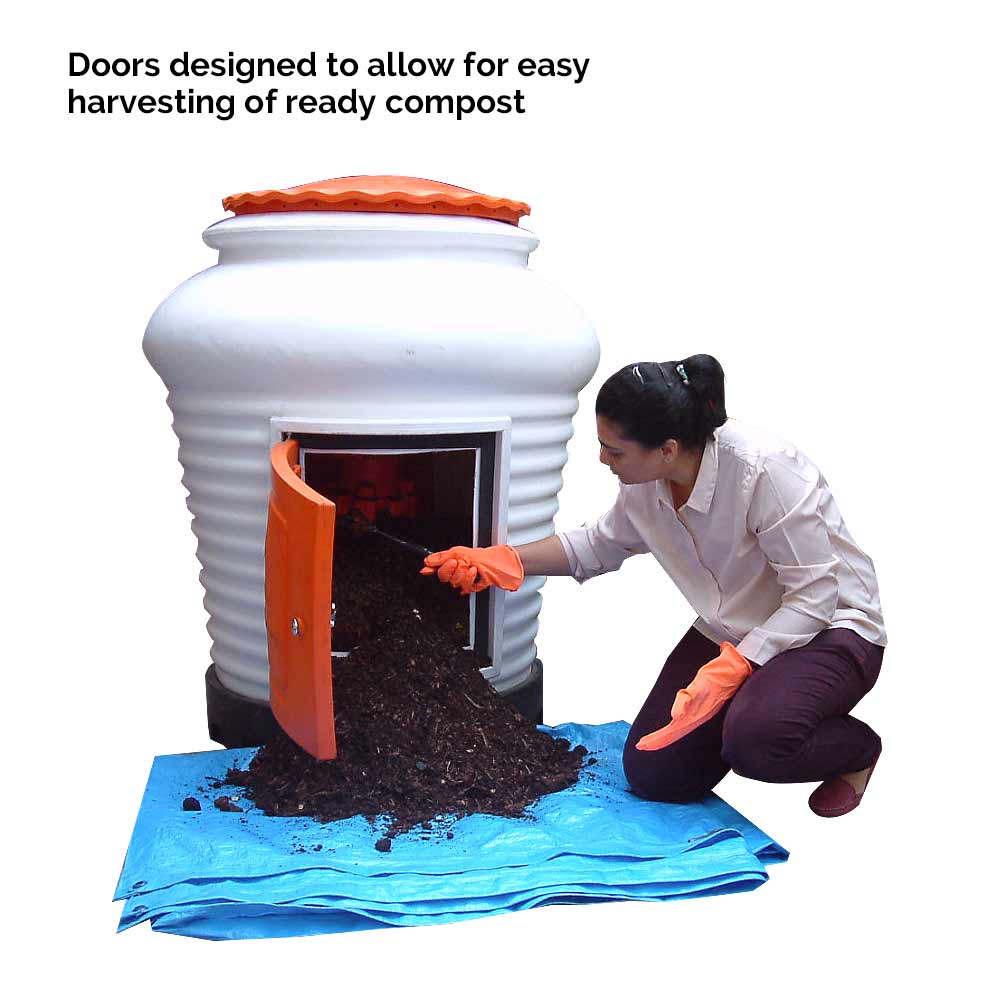
The Aaga is an aerobic 'hot pile' decentralised bulk waste composter. It makes composting simple, labour-saving and hassle free for apartments, offices, resorts & all community institutions. Daily Dump offers demos for community members to clarify questions and ensure informed decision-making in your community. We also provide detailed, hands-on training for housekeeping staff to ensure smooth functioning. You can install it on terraces, open spaces and near the entrance. The internal 'breathing tower' regulates air flow and ensures no foul odour. Ergonomic design allows easy harvesting of compost. The Aaga is a product that your housekeeping staff will be happy to use. By getting your community to use it you will inspire others and create a living lab for your children learn hands-on.
Directions for use
- The Aaga composter has to be used in series, starting with 1 pair for every 18kg
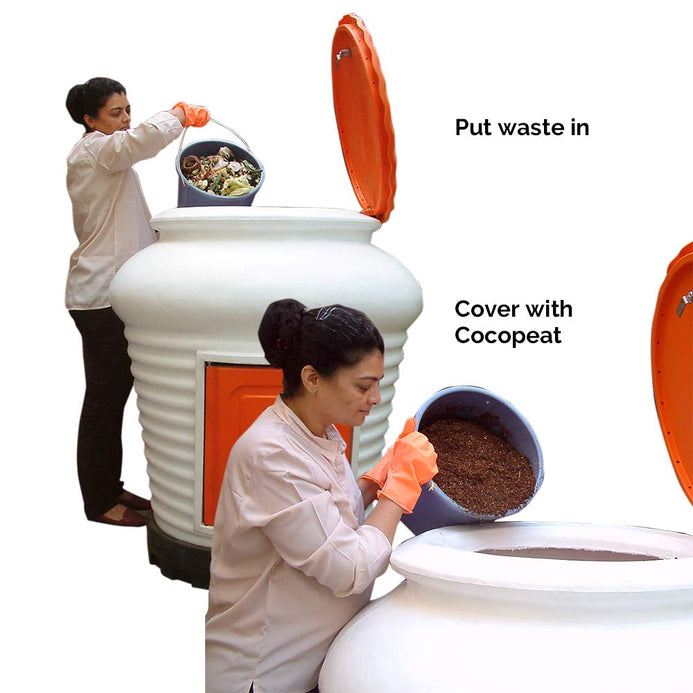
- Add daily organic waste (from kitchen & garden).
- Contents do not need to be mixed, stirred or shifted.
- Layer with adequate Remix Powder daily for smell-free, odour-free composting.
- Harvest compost after 4 weeks (first cycle) and then every 2 weeks.
This is a design copyright product. Approved by Pollution Control Board. Designed and Built in India for India. Price stated is for only 1 Aaga in Bengaluru. Accessories and Services will be extra. Any other products or accessories shown in the photographs are for representational purpose only.
Tax Info: Tax included.
Collection: Bulk Waste Composters, Daily Dump Shop, Daily Dump's Range of Composters, Non-Terracotta Shipping
SKU: CC0040
- Minimum online order Rs. 200
- Composting is a slow process, all our deliveries take at least 10 working days
- This product is available online and at our main store in Bengaluru
- Also available at Daily Dump outlets in select cities.
- For outside Bengaluru orders, please check with us on transportation costs.
- Pick up to save on delivery charge & see before you buy
- Delivery charges based on your location.
 " class="img-fluid" alt="" />


-
Description
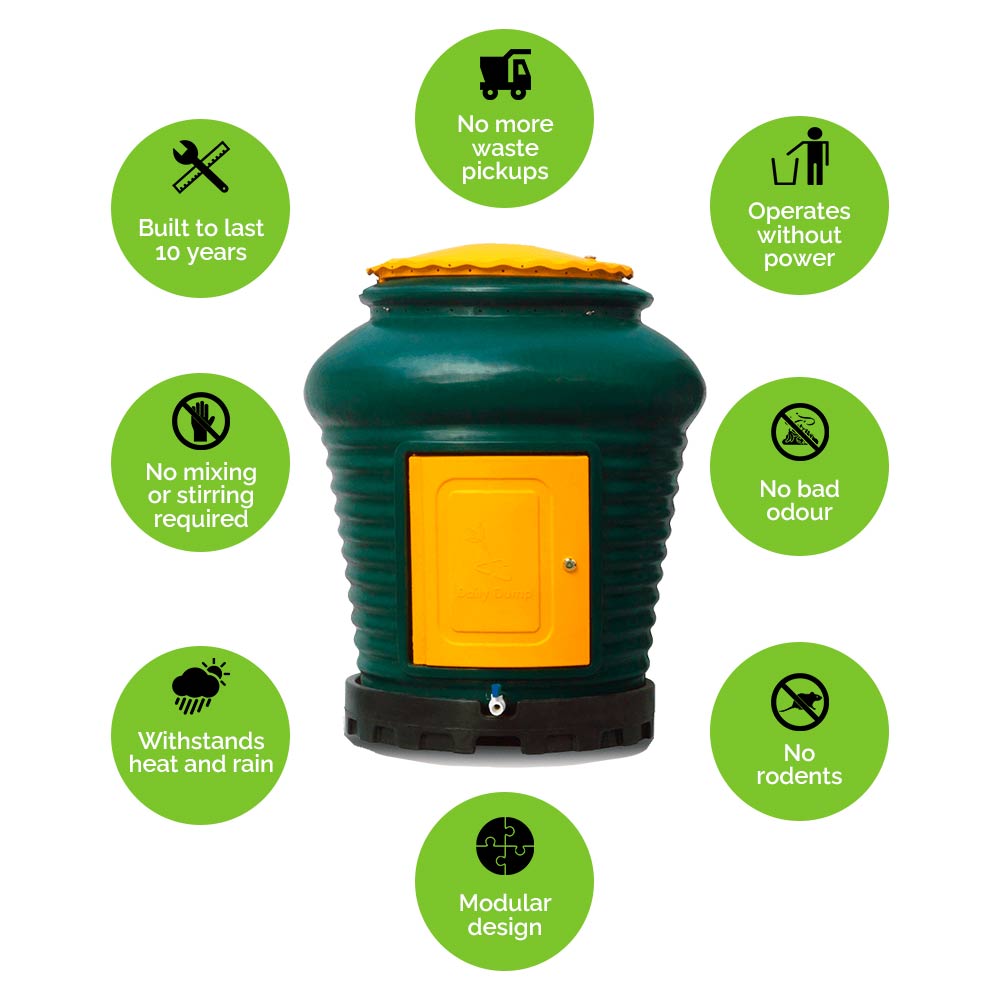
- The Aaga is a Bulk Organic Waste Converter
- Ideal for composting wet waste in apartments, offices, institutions, resorts and all other communities.
- Does not need electricity. Labour saving too.
- Rodent proof, smell-free aerobic composting
- Installation & staff training by Daily Dump
- Use in outdoor space with good ventilation
- Designed to be used in series - start with 1 pair.
- Modular design allows adding units as required.
- Every pair of Aagas in use keep 6570kg of wet waste from landfill a year.
- Refer video and instruction sheet.
-
Care
- Use Aaga outdoors, away from heavy rain.
- Maintain good hygiene in space around the Aaga composter
- The inside does not need to be cleaned when restarting a cycle.
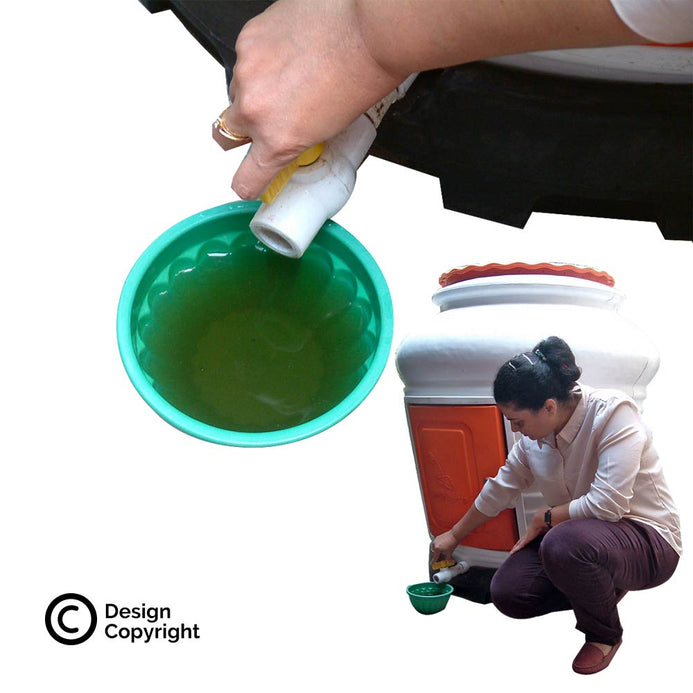
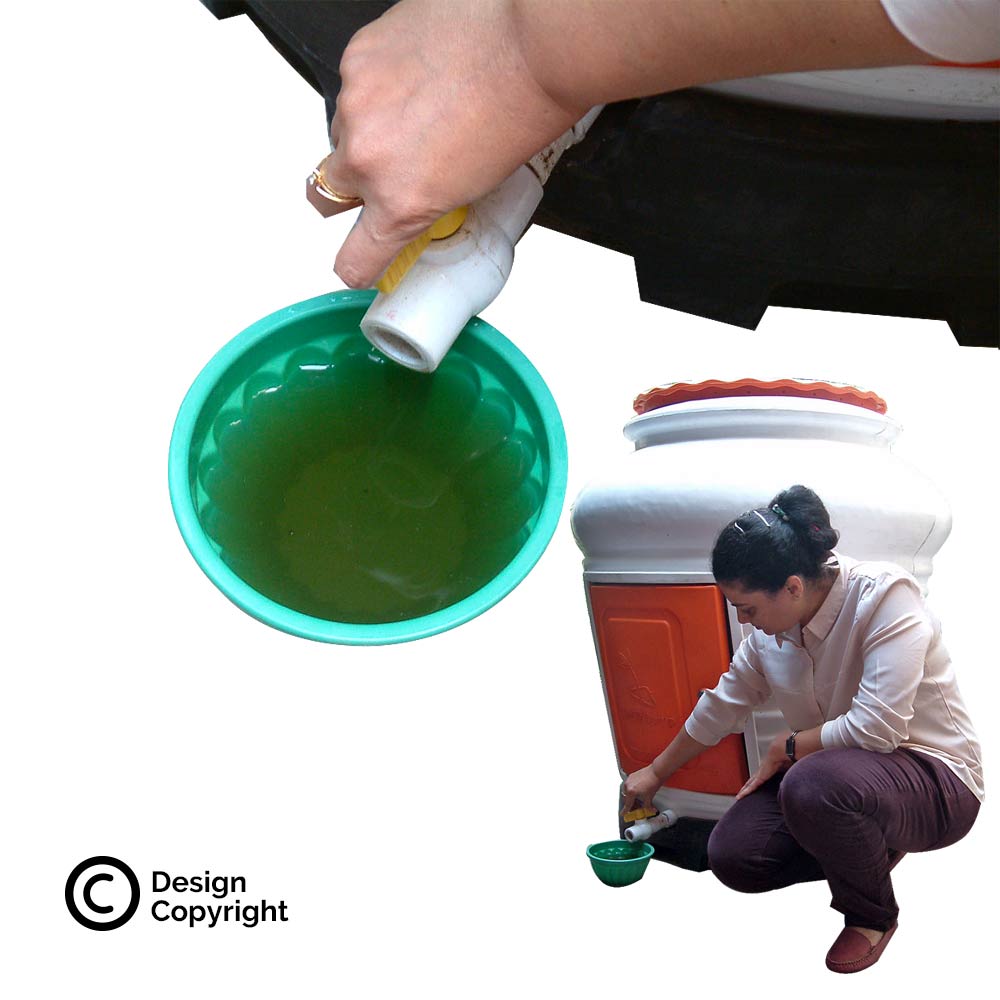
- Wipe moisture and any leechate with cloth.
- Clean surface with mild soapnut solution if dusty.
- Use acrylic paints to paint patterns on the composter.
- Please reach out for any clarification or troubleshooting.
- In case your product has a problem during the warranty period, we will deliver on the promise of the warranty.
-
Warranty
- All our products are quality checked.
- Please check the material when you pick up from store or when it is delivered to you.
- We will not be able to entertain a complaint once you have accepted the product and our person has left your premises.
- 1 year Aaga warranty against any defects in manufacturing and parts replacement.
- If you receive a damaged item, do contact us within 7 days of receipt.
- Email us a few photographs with the order number to hello@dailydump.org
Customer Reviews


OWC Gaia 800 Compost Kit | Speedy, smell-free Bulk Organic Waste Converter
| Dimensions (inches) | 40"H x 35"B x 35"W |
| Contents | 1 composter + Base |
| Capacity | 18kg wet waste daily - 1 Gaia |
| Material | UV stabilised, roto moulded plastic |
| Usage | outdoor space with good ventilation |
| Ideal for | apartments, offices, resorts & all community institutions |
The Gaia is an aerobic 'hot pile' decentralised bulk waste composter. It makes composting easy, fast, labour-saving and cost-effective for apartments, offices, resorts & all community institutions. Daily Dump offers demos for community members to clarify questions and ensure informed decision-making in your community. We also provide detailed, hands-on training for housekeeping staff to ensure smooth functioning. You can install it on terraces, open spaces and near the entrance. The internal 'breathing towers' regulates air flow and ensures no foul odour. Ergonomic design allows easy harvesting of compost. The Gaia is a product that your housekeeping staff will be happy to use. By getting your community to use it you will inspire others and create a living lab for your children learn hands-on.
Directions for use
- The Gaia composter has to be used in series, starting with 1 for every 18kg of organic waste.
- Add daily organic waste (from kitchen & garden).
- Contents do not need to be mixed, stirred or shifted.
- Layer with adequate Remix Powder daily for smell-free, odour-free composting.
- Harvest compost after 3 weeks (first cycle) and then every 2 weeks.
This is a design copyright product. Approved by Pollution Control Board. Designed and Built in India for India. Price stated is for only 1 Gaia in Bengaluru. Accessories and Services will be extra. Any other products or accessories shown in the photographs are for representational purpose only.

Gobble Max Compost Kit | Effortless smell-free compost bin for homes & offices
| Dimensions (inches) | 50"H x 25"B x 31.5"W |
| Contents | Full Kit = 1 composter unit + stand + Cocopeat 8 kgs + Compost Microbes 1 kg + Rake + Gloves + Tarpaulin sheet + Plastic drum + plastic bucket +bowl + scoop + User Manual Basic Kit = 1 composter unit + stand + Cocobrick 3 numbers + Compost Microbes 1 kg + Rake + plastic bucket + bowl + User Manual |
| Capacity | 2.5-3kg wet waste daily |
| Material | Outer container HDPE |
| Usage | Outdoor aerobic composting |
| Ideal for | wet waste composting in independent homes, villas, small apartment buildings, small offices and canteens, institutions |
The Gobble Max composter is an aerobic 'hot pile' single unit compost bin. It makes composting simple, labour saving and hassle free for homes, communities, and small offices. Ergonomically designed for ease of use, low maintenance and convenient harvest. Optimal composting happens because of the design of aeration in the Gobble Max. It comes bundled with all accessories so you can start right away.
We provide an intensive hands-on training for community members and housekeeping staff to ensure smooth functioning. You can install it on terraces, open spaces and near the entrance. And even better - it can conveniently be rolled away to different locations!
Directions for use
- Mix cocopeat powder with your daily waste in the provided bucket
- Empty this into the Gobble Max
- Cover with a layer of cocopeat.
- Repeat next day!
- You can harvest black gold in 3 weeks!
This is a design copyright product. Approved by Pollution Control Board. Designed and Built in India for India and the world. Price stated is for
1 Gobble Max @Bengaluru. Transportation extra. For outside Bengaluru enquiries, write to hello@dailydump.org
Any other products or accessories shown in the photographs are for representational purpose only.

Metal Leaf Composter for garden and landscaped areas
| Dimensions (inches) | Height 51" + 4" | Diameter 22" / 32" |
| Material | Mild steel frame with steel square mesh |
| Usage | outdoor- in garden, landscaped area, tree-lined streets |
| Ideal for | mulching and composting dried leaves in home and communities |
If you've never tried composting earlier, starting with leaves might be the easiest way to begin! It is completely easy, fuss-free, smell-free and requires almost no maintenance! A large landscape with many types of trees will need many of these to ensure that no garden clippings and leaves leave the site. Yes you can add branches and palms, make sure you cut them down to size. Gardeners value leaf compost highly for use in lawns, so please do compost your dried leaves, do not burn them and do not cart them to landfill.
Make sure to install your leaf composter on concrete blocks. This is critical to ensure good water drainage and to let it hold weight effectively (Over time the leaf composter can get very heavy and if the ground is soft, it will sink in).
Directions for use
- Add your leaves and garden litter into the composter
- Water it daily. It is very important to keep the leaf pile moist at all times.
- If you add accelerator daily, you will get your first harvest in 4-6 months. (Compost Microbes, Panchagavya, diluted cowdung slurry, EM are all great accelerators).
- Our leaf composters are designed for easy harvesting.
Patterns/colour of the product may vary from that shown in the photograph. Dimensions may vary by ± 1.5inches. Any other products or accessories shown in the photographs are for representational purpose only.

Bamboo Leaf Composter for home and community gardens
| Dimensions (inches) | 28" Dia / 32" Dia |
| Material | Mild steel frame with bamboo |
| Usage | outdoor- in garden, landscaped area, tree-lined streets |
| Ideal for | mulching and composting dried leaves in home and communities |
Composting leaves is the simplest and easiest way to begin composting! Leaf composters require almost negligible maintenance while Nature does all the work! The modular design of our leaf composters ensure that you can add just the number you need. We can help you decide.
Leaf compost is great for soil and plants. And our leaf composters help you save your leaves, instead of burning or sending them to landfill. You can read more about the value of composting leaves here.
Directions for use
- Make sure to install your leaf composter on concrete blocks. This is critical to ensure good water drainage and to let it hold weight effectively (Over time the weight of leaves composting can get very heavy and if the ground is soft, it will sink in).
- Add your leaves and garden litter into the composter
- Water it daily. It is very important to keep the leaf pile moist at all times.
- If you add accelerator daily, you will get your first harvest in 4-6 months. (Compost Microbes, Panchagavya, diluted cowdung slurry, EM are all great accelerators).
- Our leaf composters are designed for easy harvesting.
Patterns/colour on the product may vary from that shown in the photograph.Any other products or accessories shown in the photographs are for representational purpose only.